
Famous for its extravagant Mardi Gras festivals, its unique bayou ecosystem, its steaming hot beignets, and its crawfish delicacies, New Orleans is, maybe most of all, known for its prominent jazz culture. I visited NOLA during spring break, primarily to visit Tulane University, but ultimately ended up uncovering the authentic music culture within the “Big Easy.”
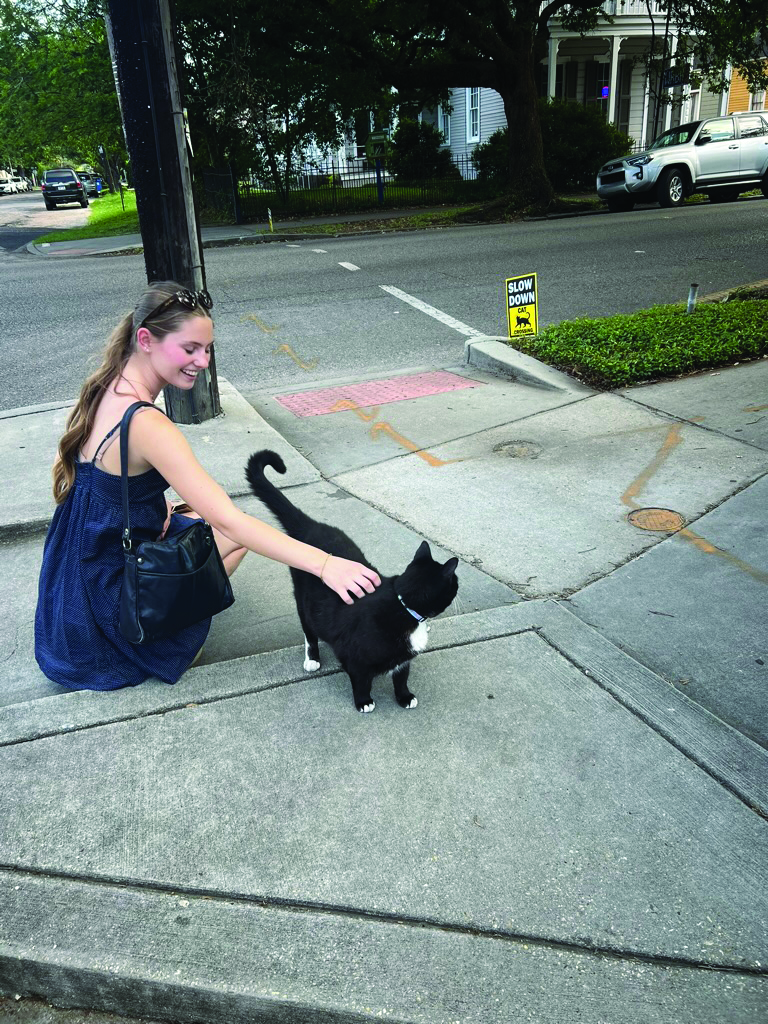
After touring Tulane University’s lush campus in mid-preparation for their annual Crawfish Festival, I walked down streets lined with classic southern architecture and a surprising amount of wandering cats. In the daytime, the residential and fairly quaint neighborhoods sparkled with southern charm. When night rolled around, however, is when the party starts.
It’s hard to escape music on Bourbon Street, the most famous party neighborhood in the New Orleans French Quarter. Clubs line the street, most with live bands, as the hosts encourage passersby to come in for a drink. In the road, instead of cars, there are groups of synchronized shirtless drummers, breakdancers taking audience volunteers, and talented teens tapping complicated rhythms with drumsticks on upside-down paint buckets.
The quieter version of Bourbon Street is Frenchman Street, where almost every establishment is also dedicated to music. Live jazz spills out of the open windows and doors of every restaurant, as the hosts beckon pedestrians to come in. At Bamboula’s restaurant, I had a front row table facing a small stage hosting a bass, saxophone, drum, and guitar combo. Not only was the bread pudding life-changingly delicious — recommended above every other dessert on the menu by our waiter, and rightfully so — but the music was authentic. The foundation of New Orleans jazz is audience celebration — the musicians even explicitly encourage it —such as hooting and hollering after a scat solo or saxophone riff, unlike a typical classical concert. While loud talking is discouraged, the live jazz environment encourages the audience to let the band know when they’re enjoying the music.
Next door to Bamboula’s is The Maison, where a classic brass jazz combo, complete with drums, bass, guitar, two trombones, two trumpets, and a saxophone, was in full swing when I arrived. After her smooth scat solo, the band leader sat in her chair, playing her trumpet one-handed while the entire restaurant applauded. When their set ended, a rhythm and blues jazz combo entered, led by an eccentric, orange afro-haired woman. In contrast to the smooth, classic jazz of the last group, these musicians rocked the restaurant with 80s R&B jazz riffs.
Frenchman Street is also home to the Louisiana Music Factory record store, with walls covered in vinyl, band T-shirts and black-and-white posters. Boxes of donated records sat below rows of new vinyl and CDs, from New Orleans jazz to rock and roll to country classics. The further back into the store I walked, the more niche and inexpensive the music became, mostly used one-hit-wonders and $3 donation records. The star of the show was Snooks, the residential tabby cat wandering between walls of Beatles CDs and Elvis records. After sufficiently petting his Majesty Snooks, I decided on an Amy Winehouse album, a Peter, Paul and Mary album, and a Beatles CD.
On the quieter Magazine Street, beside thrift stores, fun boutiques and coffee shops, Peaches Record store hosts expansive walls of records and CDs of all genres and prices. Originally a historic Woolworth store, Peaches’ left wall is taken up by the original lunch counter, bar stools, and soda machine. From the wide array of diverse genres available, I picked out a Weezer record and a Joan Baez record to take home.
Undeniably, New Orleans culture is one of the most authentic and definitely a must-see for all music — and cat — lovers.
